
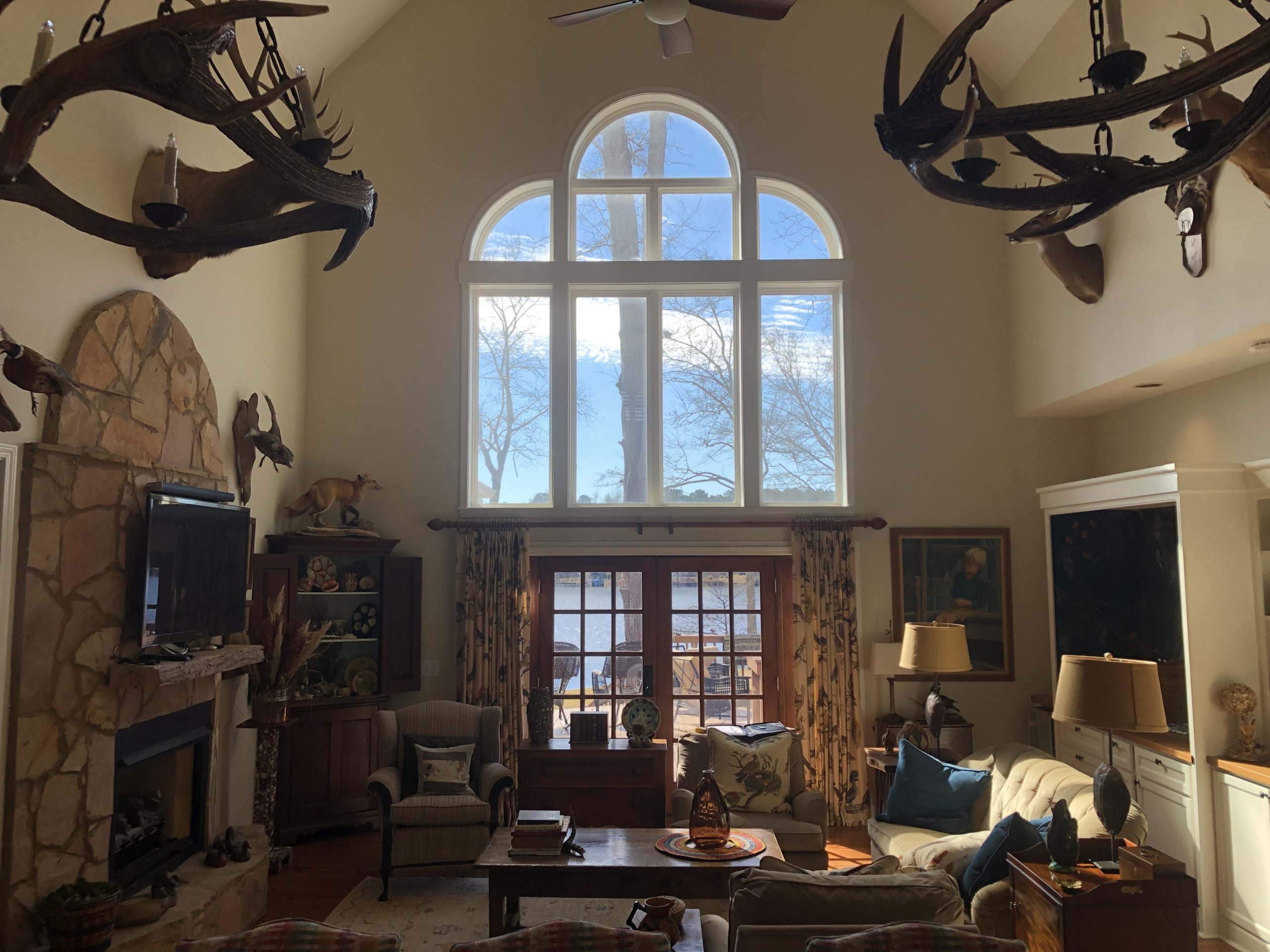
Home Window Film Buyer’s Guide
By Jeff Franson
Industry Expert & Founder of FutureVu Brands
What window film is, and why it matters.
1) What is window film, and how does it work?
Window film is a thin, multi-layer polyester (PET) or ceramic laminate bonded to glass. It selectively filters solar energy—reducing heat, glare, and UV—without replacing your windows.
2) What are the types of window film?
- Solar/energy: Cuts heat and glare; keeps interiors cooler.
- Ceramic: High heat rejection with high clarity (low reflectivity).
- Privacy: Daytime, one way, or frosted/opaque options.
- Safety & security: Thicker films that help hold glass together against impact.
- Decorative: Frosts, gradients, patterns, branding accents.
- UV/fade control (clear): Nearly invisible, blocks UV.
3) What are the benefits?
- Thermal comfort & cooling load reduction
- Up to ~99% UV rejection to help protect floors, art, and skin
- Glare reduction for screens and comfort
- Privacy/aesthetics without major renovation
- And faster payback than window replacement in many homes
4) Will film make my house too dark?
- Not if you choose correctly. Modern spectrally selective films maintain natural daylight while still rejecting significant heat and UV. Visible Light Transmission (VLT) options range from ~10% (tinted) to 70%+ (nearly clear).
Performance & technical clarity
1) How much heat, glare, and UV will it block?
- UV: ~99% (UVA/UVB to 380–400 nm) across most architectural films.
- Heat (TSER/Solar Heat Gain): Typically 35–65% reduction depending on film and glass.
- Glare: Often 40–80% reduction; target ~50% for screen comfort.
2) Will film void my window warranty?
- Some OEM glass warranties exclude aftermarket films; reputable installers provide a matching or replacement glass warranty (manufacturer-backed) to fill any gap.
- Always ask for the film manufacturer’s glass breakage & seal failure coverage in writing.
3) How long does it last, and what’s the warranty?
- Quality residential films commonly carry lifetime limited warranties (material & labor).
- Real-world lifespan is often 15–25+ years depending on sun exposure and film type; exterior-applied films have shorter terms.
4) Can it be removed or replaced?
- Yes. Films can be professionally removed with heat/solution and the glass cleaned back to original condition.
- Re-tinting is straightforward.
5) How does film compare to replacing windows?
- Cost: Film is typically 10–25% of the cost of new high-performance windows.
- Speed: Installed in hours/days, no construction.
- Performance: Film significantly reduces heat gain and UV; new windows improve insulation (U-factor) and air infiltration. Many homeowners add film to new windows for peak solar control.
Cost & value
1) How much does it cost?
- Typical installed residential pricing: $8–$18 per sq ft for most interior films; $18–$35+ for specialty/security/exterior films. Factors: film type, glass size/height, access, and site conditions.
2) What’s the ROI/energy savings?
- Homes commonly see 5–15% annual HVAC savings, higher in hot, sunny climates or west/south exposures. Payback can be 2–5 years for solar-control films; decorative/privacy films are driven more by comfort and aesthetics than utility ROI.
3) Are there rebates or tax credits?
- Occasional utility rebates and local incentives exist. Ask your installer to check current programs and provide documentation (spec sheets, NFRC data if applicable).
Aesthetics & lifestyle
1) How will my windows look?
- Options range from virtually invisible to tinted, low-reflective, or mirrored. For most homes, we recommend low-reflective ceramic to keep a natural look inside and out.
2) Can I get daytime privacy without losing my view?
- Absolutely! One-way privacy works when it’s brighter outside than inside.
- At night, when it’s brighter indoors, you’ll need shades or dual-reflective/tinted options to maintain privacy.
3) Are there clear films that still block heat and UV?
- Yes—spectrally selective/ceramic films deliver high IR (heat) rejection and 99% UV while remaining very clear (60–70%+ VLT).
Choosing the right installer
1) What should I look for in a qualified installer?
- Manufacturer-certified dealer/installer with access to full product lines
- In-home consultation with glass assessment and measured specs
- Written proposal with film model numbers and performance data
- Proof of insurance, warranty registration, and after-care plan
- Local references and photo portfolio
2) How do I compare quotes?
- Compare apples to apples: film model + VLT + performance (TSER/SHGC/UV) + warranty + scope (prep, ladders, hard-to-reach glass) + timeline. Cheapest isn’t best—film grade and warranty drive long-term value.
3) What certifications/associations matter?
- Look for manufacturer certifications and membership/education with groups like IWFA.
- Experience with tempered, laminated, low-E glass matters- ask for examples.
4) Can I see before/after photos or case studies?
- Yes. Request project photos and two recent homeowner references with similar window types/exposures.
5) What do customer reviews say?
- Scan Google, Yelp, Nextdoor for patterns: punctuality, cleanliness, solution fit (not just “sold the darkest film”), and post-install support.
How to choose—my quick framework
- Define the problem by room: Heat? Glare? Fade? Privacy?
- Select film family: Ceramic/spectrally-selective for clear look; dual-reflective for glare/privacy; safety for impact
- Pick VLT: Start around 35–50% for glare control; 60–70%+ for clear look with heat/UV control.
- Check data: Confirm TSER/SHGC, UV 99%, warranty.
- Verify installer: Certification, insurance, references, written scope.
Sample scope: what a good proposal looks like
- Exact film brand + series + VLT per elevation/room.
- Measured square footage and window count.
- Surface type: annealed, tempered, laminated, low-E (which side).
- Preparation & protections: drop cloths, ladders, furniture moves.
- Warranty terms: product, labor, glass breakage/seal failure coverage.
- Schedule & access plan; clean-up and after-care instructions.
Care & maintenance
- Wait 30–60 days before final cleaning (per product guidance).
- Clean with ammonia-free glass cleaner and a soft microfiber.
- Avoid abrasive pads/razor blades on filmed surfaces.
Typical timeline
- Consultation: 30–60 minutes (assessment + samples).
- Proposal: 24–48 hours with model-specific data.
- Install: ½–1 day for a few rooms; 1–2+ days for whole-home.
- Cure time: Film may look hazy for 1–2 weeks; clarity returns as moisture evaporates.
A Final Word From Jeff
Overall, the “right” film is the one that solves your room-by-room problems while preserving the look you want. And it’s only as good as the installer who specifies and applies it. Insist on clear specs, real performance data, and a warranty you can register.