

Imagine window film that thinks for itself—automatically adjusting to changing light conditions throughout the day to maintain perfect indoor comfort. This isn’t futuristic thinking; it’s the reality of transitional window film technology. Using groundbreaking photochromic science, these intelligent films adapt to sunlight intensity in real-time, providing optimal heat control exactly when you need it while maintaining crystal-clear views when conditions are mild.
The Problem with Static Solutions
Traditional window films face an impossible challenge: providing consistent performance across wildly varying conditions. Static films that work well during blazing summer afternoons may be unnecessarily dark on overcast days. Films optimized for winter comfort can become inadequate when summer heat arrives.
This creates frustrating compromises for property owners. Dark films provide excellent heat control but can make interiors feel cave-like during cloudy weather. Light films maintain bright, cheerful spaces but offer insufficient protection during peak sun exposure. Most people end up choosing somewhere in the middle—accepting mediocre performance in all conditions rather than excellence when it matters most.
The economic implications are significant. HVAC systems work harder than necessary when films don’t adapt to changing conditions. Energy costs remain higher than optimal because static films can’t provide precision climate control. Comfort suffers as indoor temperatures fluctuate with weather patterns that traditional films can’t anticipate.
The Science of Photochromic Innovation
Transitional window films represent a quantum leap in material science, incorporating stable photochromic molecules that respond dynamically to UV radiation intensity. Unlike temporary photochromic materials found in eyeglasses, which can deteriorate over time, these advanced window films maintain their adaptive properties for decades.
The molecular structure is remarkably sophisticated. When UV intensity increases, specialized molecules within the film undergo a reversible transformation, gradually darkening to block excess heat and glare. As UV levels decrease, the same molecules automatically return to their lighter state, maintaining natural light transmission while reducing unnecessary heat blocking.
This transition happens gradually and continuously—not in dramatic shifts that would be visually distracting. The film constantly monitors UV intensity and adjusts its performance in real-time, creating seamless climate optimization that occupants barely notice but definitely feel.
The ceramic components within transitional films provide exceptional infrared heat blocking even in their lighter state. This means substantial energy benefits exist regardless of the film’s current tint level, with maximum benefits occurring automatically during peak heat conditions.
Residential Applications That Transform Daily Living
Homeowners are discovering that transitional window films solve comfort problems they didn’t even realize could be addressed. East-facing bedrooms that receive intense morning sun benefit enormously from films that automatically darken just as the sun becomes problematic, then clear throughout the day as shade patterns change.
Living rooms with large windows represent ideal applications for transitional technology. These spaces need to feel bright and open during most conditions, but require serious heat control during summer afternoons. Traditional films force homeowners to choose between year-round darkness or summer discomfort, but transitional films provide both brightness and protection exactly when each is needed.
Home offices with challenging light conditions become dramatically more productive with transitional films. Screen glare that fluctuates throughout the day becomes automatically managed, eliminating the constant adjustment of blinds and the productivity losses that come with poor lighting conditions.
Kitchen and dining areas particularly benefit from transitional technology’s ability to maintain consistent comfort during meal preparation and family gatherings. These spaces need to feel welcoming and bright, but cooking activities generate enough heat without adding solar gain during peak sun conditions.
Commercial Buildings and Energy Optimization
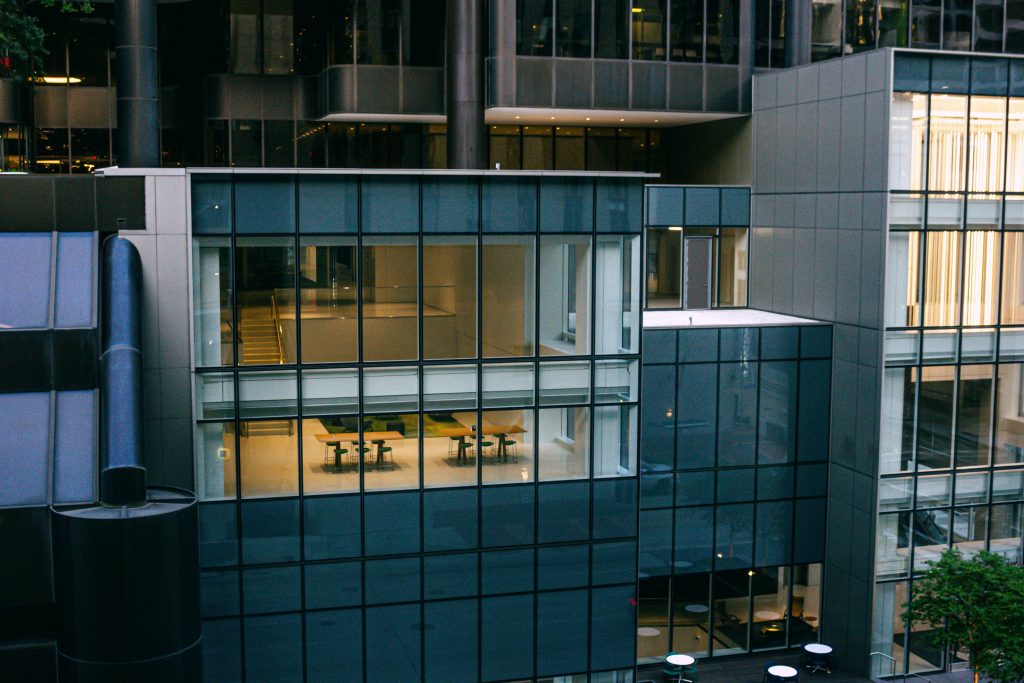
The commercial applications for transitional window films are transforming how building managers approach energy efficiency. Office buildings equipped with transitional films report dramatically improved HVAC efficiency because the building envelope automatically adapts to changing solar conditions throughout the day.
Conference rooms with challenging orientations become consistently comfortable meeting spaces. South and west-facing rooms that were previously unusable during afternoon hours become prime real estate when films automatically compensate for solar intensity. Employee productivity improves when meeting spaces maintain consistent comfort regardless of time of day or weather conditions.
Retail environments use transitional films to maintain optimal merchandise display conditions while controlling energy costs. Products sensitive to UV damage receive automatic protection during peak sun exposure, while display areas maintain bright, welcoming atmospheres during overcast conditions.
Healthcare facilities benefit from transitional films’ ability to provide patient comfort while supporting healing environments. Natural light has proven therapeutic benefits, but excessive heat and glare can stress recovering patients. Transitional films ensure patients receive beneficial natural light while automatically preventing the discomfort that can impede recovery.
Economic Benefits That Compound Over Time
The financial advantages of transitional window films extend far beyond simple energy savings. HVAC system longevity improves significantly when systems don’t have to work as hard during peak demand periods. The automatic heat reduction during the hottest parts of the day prevents system strain that leads to premature equipment failure.
Demand charge reductions can be substantial for commercial properties. Many utility companies charge premium rates during peak demand periods, which typically coincide with maximum solar heat gain. Transitional films automatically reduce cooling loads precisely when these charges are highest, creating compounding savings.
Productivity improvements in office environments translate to measurable economic benefits. Studies consistently show that employees perform better in comfortable environments with optimal natural light. Transitional films create these conditions automatically, eliminating the productivity losses associated with poor lighting or uncomfortable temperatures.
Maintenance cost reductions become apparent over time. Furnishings, flooring, and artwork last significantly longer when protected from UV damage, but only when that protection doesn’t compromise the bright, welcoming environments that make spaces functional and appealing.
Environmental Impact and Sustainability
Transitional window films support environmental goals in multiple ways that extend beyond basic energy conservation. Reduced carbon footprint from lower HVAC usage contributes directly to sustainability objectives, with the automated efficiency providing consistently better performance than static alternatives.
Extended building component lifespan reduces waste and resource consumption. When HVAC systems last longer, furnishings don’t fade prematurely, and flooring maintains its appearance for extended periods, the cumulative environmental benefit is substantial.
Improved indoor air quality often results from reduced HVAC runtime. Systems that don’t have to work as hard during peak periods can dedicate more energy to proper ventilation rather than just temperature control. This creates healthier indoor environments that support both human health and productivity.
Installation and Performance Considerations
Professional installation ensures optimal performance from transitional window films. Certified installers understand the specific requirements for photochromic films, including proper preparation techniques and environmental considerations that affect long-term performance.
Quality control during installation is particularly important for transitional films. The photochromic molecules must be properly positioned and protected during the installation process to ensure even activation across the entire window surface. Professional installers have the tools and techniques necessary to achieve consistent results.
Performance monitoring after installation helps optimize the technology’s benefits. Modern transitional films can be fine-tuned based on specific building orientations and local climate conditions to maximize their adaptive response patterns.
Comparing Technologies and Making Decisions
When evaluating window film options, transitional technology offers unique advantages that static films simply cannot match. Traditional ceramic films provide excellent consistent performance but cannot adapt to changing conditions. Reflective films may offer superior heat blocking but at the cost of natural light and exterior aesthetics.
Smart films that require electrical control provide maximum flexibility but involve ongoing energy consumption and potential maintenance issues. Transitional films provide automatic optimization without any ongoing energy requirements or mechanical systems that could fail.
The decision often comes down to priorities: static films for predictable performance, smart films for maximum control, or transitional films for automatic optimization that provides excellent performance without ongoing complexity.
The Future of Intelligent Buildings
Transitional window film technology represents a significant step toward truly intelligent building materials that respond automatically to environmental conditions. Future developments may include films that respond to multiple environmental factors simultaneously, creating even more sophisticated automatic optimization.
Integration potential with building automation systems could provide data about film performance and energy impact, enabling facility managers to optimize other building systems based on real-time solar control performance.
Advanced materials research continues developing new photochromic compounds that could expand the range of adaptive responses, potentially including temperature-sensitive properties alongside light-responsive capabilities.
Making the Transition
The shift from traditional window films to transitional technology requires understanding how automatic optimization changes the building performance equation. Instead of accepting fixed compromises, building owners can achieve optimal performance across all conditions while eliminating the management complexity of mechanical solar control systems.
Return on investment calculations for transitional films must account for the compounding benefits of automatic optimization. Energy savings, comfort improvements, productivity gains, and equipment longevity create value streams that continue growing over the film’s lifetime.
Risk reduction is another often-overlooked benefit. Transitional films eliminate the human factors that cause traditional solar control systems to underperform—no one forgets to activate them during heat waves or leaves them engaged during mild weather.
Contact CoolVu today to discover how transitional window film technology can automatically optimize your indoor environment while delivering superior energy performance, comfort, and sustainability benefits that adapt perfectly to your specific conditions and needs.